Showing posts with label Literary Agencies. Show all posts

Monday, October 25, 2010

The Partial

Ok. Now that you've created for yourself a nice complete database of agents/ agencies to query, created an awesome query letter, and sent out a few queries, you're probably what comes next.

Like you, I was also wondering what type of feedback I should be hoping for after sending out queries. Should I log on to my email every five minutes or cling to my phone as though it were my lifeline? Where and how would these agencies contact me after reading my query letter?

The answer to these questions is pretty simple.If you've done your job right an agent's first response to your query letter will be a request for sample chapters. This type of request is called "a partial" and, although it is good news, don't get overly excited. A request for a partial manuscript, which can come via phone or email, is not an offer of representation.

Should you get a request for sample chapters, you need to make sure you have the accurate amount, properly formatted. Most likely, the agent will request the first three chapters or the first fifty pages. If the request is for a specific number of pages, it is perfectly fine to go over a FEW pages in order to make the partial end at the end of a chapter. Most agents would rather you go over a few pages than leave them hanging with an incomplete chapter.

Your manuscript's font should be Times New Roman, size 12, and page numbers should be located in the upper right corner with your last name and manuscript title in the upper left.

You should also include a title page with your name, address, phone number, and email address in the upper lef-hand corner. Centered, about one third of the way down the page you should include the title of your manuscript in all caps and two spaces below that, include "BY" in all caps and YOUR NAME in all caps two spaces below that. Check out the sample to the left if you have any questions.

Now that your partial is formatted, go ahead and send it off. This can be either via email or snail mail, but either way, you need to include a cover letter that tells the agent that you have enclosed a requested partial manuscript. Include REQUESTED MATERIALS in the subject or write it on the envelope.

Now just sit back and wait it out! Good Luck!

Tuesday, October 19, 2010

Rejection Letters

Sad faceImage via WikipediaAccording to wikipedia, there are exactly four types of rejection letters: literary, job, college, and romantic. Under the banner of literary rejection, there are four versions that are as follows:

1. The Non-Existant Rejection--this rejection offers no proof of life, but it's still very real. Haven't heard from an agency 10 years after sending them your query? Yep, you've got a case of the "Non-Existant Rejection."

2. The Personalized Rejection--while this rejection has a bit of flair; they might have called out some of the best parts of your submission, encouraged you to keep trying, or suggested helpful alterations, it is still rejection none-the-less. It might sting a little, but at least you've got those little comments to ease the burn.

3. The Mass Printed Letter--this rejection will have zero reference to you or your particular submission other than the fact that it's just not right for the agency or publisher. Instead of your name, words like "writer" will be thrown around willy nilly.

4. The Standard Form Letter--now this little gem I have personal experience with. Yesterday I received my first rejection letter, and while I was expecting it, I can't say that I was pleased. This letter is clearly used on a daily basis by the agency, but they did have the decency to cut and paste my name into the salutation.

Now here's the evidence of my indoctrination into the world of the struggling author. I've provided it for you all to see in the hopes that it will prepare you as well as encourage you, because although I have been rejected...sigh, I haven't given up hope. Hey, at least it isn't a "Romantic" rejection letter...I hear those are brutal :)

All right, here she is, the first rejection for The Other Side of the Glass. It's short, sweet, to the point, and currently resides on my fridge:

Dear Jacey,


Thank you so much for writing to me about your project. I read and


consider each query carefully and while yours is not exactly what I am


looking for, I would certainly encourage you to keep trying.
Enhanced by Zemanta

Wednesday, October 13, 2010

Contacting Those Agencies

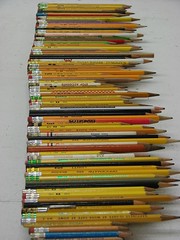
pencilsImage by hownowdesign via FlickrNow that you have, no doubt, put together an amazing query letter, it's important to take the next step. That query letter isn't going to do its job sitting on your desk. In order to find an agent or agency to represent you and your book, you have to start off by doing a little research.

I started by searching the internet for literary agency databases, and after going to the homepages of each agency that represented my genre, I soon discovered their submission guidelines pages. Nearly every agency I have queried has had a different list of requirements, so it's important to review their guidelines before querying.


Here are some databases I've found to be helpful:

http://www.agentquery.com/writer_hq.aspx

http://www.querytracker.net/

http://www.agentresearch.com/dreckoning.html

http://www.ebookcrossroads.com/agents.html

Now this process is a bit lengthy, and if you are planning to query several agencies at once, which is perfectly acceptable, I suggest that you keep a spreadsheet that contains a list of each agency queried, their contact information, website address, a link to their submissions guidelines page, as well as a column for the date on which you sent your query. This will come in handy as it can be anywhere from five days to six months before you hear back from various agencies.

One caution I must add when querying agencies involves dedicated research. You must acquaint yourself with the agencies before submitting your query! No reputable agency will charge a reading fee and this is just one red flag to look out for. Familiarize yourself with other books they represent, and don't be afraid to do a quick google search to make sure they are legitimate.

Good luck putting together those contact spreadsheets, and remember that all of this hard work is worth it! With every query submitted, you are one step closer to accomplishing your goal and seeing your first novel published.
Enhanced by Zemanta

Wednesday, September 15, 2010

The Query Letter

Old book bindings at the Merton College library.Image via Wikipedia I'm happy to announce that as of July 29th, 2010 I have officially completed my first novel! Utilizing the research and guidelines I outlined on this blog, I was actually able to plan and complete writing a book that I am really proud of.Now, a new phase of this journey has begun, and I am learning the next steps right along with you.

After completing a manuscript, there are two key goals a writer should set. The first of these involves creating a Query Letter. The query letter is a key tool in the new writer's toolbox and is VERY important. Query letters are crafted and sent to potential agencies or publishers with the goal of garnering interest in your manuscript. A successful query letter will result in a positive response from either an agent or a publisher.

The route that most often leads to success for new writers is contacting an agency,or a several,finding representation in that way,and allowing them to navigate the industry on the writer's behalf. This isn't always the case, and in some instances, personal connections are more beneficial. Assuming that, like me, your literary connections are few and far between, the next series of posts will outline some of the best methods for creating query letters and submitting them to agencies.
Enhanced by Zemanta

Tuesday, April 13, 2010

Why Use Literary Agencies

A few days ago I posted some information about a few notable literary agencies  in New York, but looking back, I feel like I failed to mention the importance of utilizing them. Until now, I have been focusing on the mechanics and processes of writing a manuscript, but once it is complete, the literary venture has really only just begun. Depending on where you look, different advice is offered about the "correct" next step to take. Some sources believe direct contact with publishing companies is the way to proceed, but far more agree that finding an agent is the way to go.

While both of these suggestions are out there on the web-o-sphere, neither really gives you the concrete reasons for why you should or shouldn't seek out literary agent representation. So, to remedy this, I have compiled a few common reasons detailing how an agent can help. This list isn't designed to make you chose something either way, but it should give you an idea for what they have to offer:

1. Literary agents have normailly worked in the field for some time, and their experience can go a long way towards giving authors helpful and accurate advice.

2. If agents aren't able to provide specific advice, they will, no doubt, be able to introduce you to an indivual who can.

3. Because their job is to know about the literary field, they often are able to inform their clients of the important innovations and developments within the industry.

4. Primarily, agents act as the professional advocates for their client's work. Once accepted, they do their best to introduce the product to the publishers  and editors that will be most interested.

5. Within the same vein as number four, agents will also know with publishers and editors who are most diffiult to work with or have the least experience.

6. Monetarily, agents will compile offers from publishers and editors and bring them to their clients. This eliminates the added worry of publishing fee negotiations, allowing writers to focus on their job without the added stress of financial maneuvers.

7. Overall, the agent will be your advocate, connecting your work with the most relevant industry individuals while ensuring a timely response.

Thursday, April 8, 2010

New York Literary Agencies

After finishing a manuscript, you might be wondering what your next step should be. Well, if this is your first book, your best bet is to find a Literary Agency to represent your work. Most agencies represent several authors and their work, so they are always looking for new clients. Geographically, there are several areas in the world where these agencies can be found, including: Canada, United Kingdom, and in the U.S. (nearly every state). To help you get started I have located ten potential agencies within the city of New York. By clicking on the map's markers you will open an information box that gives the agency's name, address, a link to their home page, and a few key bits of information (what they accept, methods of querying, fees, etc...). If you're not exactly sure how to go about querying, just search their websites, but for a more detailed list of do's and don't's check back here in a couple of weeks where I'll be posting a blog on Query Questions.


View New York Literary Agencies in a larger map
Reblog this post [with Zemanta]

Share This

ShareThis