Showing posts with label rules. Show all posts

Sunday, October 17, 2010

Literary Agency Red Flags

Simple Magnifying Glass IconsImage via Wikipedia So you've been working diligently to compile a database of agencies and agents you wish to query but you are still a little unsure about the reputability of one or more of them, what do you do? Well, after you've done a quick google search and nothing has come up, but you're still feeling unsure you should go to this website: http://pred-ed.com/ Preditors & Editors provides a comprehensive list of several agencies as well as a ranking of the agency based on its reputation and recent activities.

Entries on P&E are pretty simple to understand. Here, a sample entry that looks like the one below and tells you that Nelson Literary Agency is recommended by the site and the $ indicates that they have verified sales to legitimate royalty-paying publishers on record.

Nelson Literary Agency: $ Recommended. A literary agency located in Denver, CO.

An agency with a poor reputation will show up on Preditors & Editors like this:

AEG (American Enterprise Group) Publishing Group: Strongly not recommended. A consortium of literary agencies and one or more vanity publishers. Their name is also somewhat redundant (and that's for a publishing business?).

1/29/09: AEG Publishing Group seems to have a credibility gap showing. Recent information reveals that the interview they've been claiming was by Deliriousgirl was actually written by them and not her according to her response on this page at AbsoluteWrite.

As you can see, a quick glance at P&E will help you learn a lot about an organization and whether or not you should query them. If you are unsure about any aspect of an agency, I suggest you use this website as a tool to gauge their reputation. You should also know that no reputable agency will pressure you to sign a contract before you are ready, and none will ask for payment upfront.


Enhanced by Zemanta

Wednesday, October 13, 2010

Contacting Those Agencies

pencilsImage by hownowdesign via FlickrNow that you have, no doubt, put together an amazing query letter, it's important to take the next step. That query letter isn't going to do its job sitting on your desk. In order to find an agent or agency to represent you and your book, you have to start off by doing a little research.

I started by searching the internet for literary agency databases, and after going to the homepages of each agency that represented my genre, I soon discovered their submission guidelines pages. Nearly every agency I have queried has had a different list of requirements, so it's important to review their guidelines before querying.


Here are some databases I've found to be helpful:

http://www.agentquery.com/writer_hq.aspx

http://www.querytracker.net/

http://www.agentresearch.com/dreckoning.html

http://www.ebookcrossroads.com/agents.html

Now this process is a bit lengthy, and if you are planning to query several agencies at once, which is perfectly acceptable, I suggest that you keep a spreadsheet that contains a list of each agency queried, their contact information, website address, a link to their submissions guidelines page, as well as a column for the date on which you sent your query. This will come in handy as it can be anywhere from five days to six months before you hear back from various agencies.

One caution I must add when querying agencies involves dedicated research. You must acquaint yourself with the agencies before submitting your query! No reputable agency will charge a reading fee and this is just one red flag to look out for. Familiarize yourself with other books they represent, and don't be afraid to do a quick google search to make sure they are legitimate.

Good luck putting together those contact spreadsheets, and remember that all of this hard work is worth it! With every query submitted, you are one step closer to accomplishing your goal and seeing your first novel published.
Enhanced by Zemanta

Sunday, October 3, 2010

Conquering the Query Letter Beast

So, I introduced the concept of the Query Letter in my last post, and since then I have been attempting to research and create my own. Let me tell you though, writing this one-page letter was harder than writing the entire book.

The purpose of the Query Letter is to persuade an agent that taking you (and your book) on as a client is a FANTASTIC decision, and I'm not sure why, but this just seemed to put a lot of pressure on what amounted to four 4-5 sentence paragraphs. So, was it intimidating? Absolutely. Is it impossible? Absolutely NOT.

Everything seemed to come together after I told myself I could do it. A few positive affirmations and a little bit of visualizing myself as a published author was all I really needed--because: I'm good enough, smart enough, and doggone it, people like me :).

Ok, maybe that's not all you need. It definitely helped me to have a little more confidence, but here are a few other things you need to know:

1. Start off by writing the kicker paragraph. Sit down, and in 4-5 sentences, write the core of your book. Convince me that I want to read it. Make the last sentence your hook. Something that makes them want to know more. It definitely helps if you think of this paragraph as your "movie trailor" and the words are the script for that amazing voice-over guy that makes audiences want to see every single movie.

2. Now, write the paragraph that gives us the essence of your novel. What is your novel about? And I don't mean generic summaries. What questions does it pose? What questions does it answer? What about your novel will make readers think? Hooks like this make your work stand out will make agents want to know more.

3. Here's an easy one: The product tag. Let the agent know what you need and what you have to offer. Are you seeking representation? How long is your book? What is its title? What genre do you think it fits? What audience do you think it speaks to?

4. The Credentials. This can either be really tricky, or ridiculously simple. If you've got them, flaunt them. BUT only if they're pertinent! Mention degrees if relevant, previous published pieces if existant, and industry experience, if any. If you don't have them, keep it short. Let the focus be on your book and the effort you've put into it. You don't need to state this, because it should be evident by the obvious care and effort you've put into writing your query letter.

Now get out there and find those agents! Good Luck!

Enhanced by Zemanta

Thursday, April 8, 2010

New York Literary Agencies

After finishing a manuscript, you might be wondering what your next step should be. Well, if this is your first book, your best bet is to find a Literary Agency to represent your work. Most agencies represent several authors and their work, so they are always looking for new clients. Geographically, there are several areas in the world where these agencies can be found, including: Canada, United Kingdom, and in the U.S. (nearly every state). To help you get started I have located ten potential agencies within the city of New York. By clicking on the map's markers you will open an information box that gives the agency's name, address, a link to their home page, and a few key bits of information (what they accept, methods of querying, fees, etc...). If you're not exactly sure how to go about querying, just search their websites, but for a more detailed list of do's and don't's check back here in a couple of weeks where I'll be posting a blog on Query Questions.


View New York Literary Agencies in a larger map
Reblog this post [with Zemanta]

Saturday, April 3, 2010

Four Possible Narration Methods/ Techniques

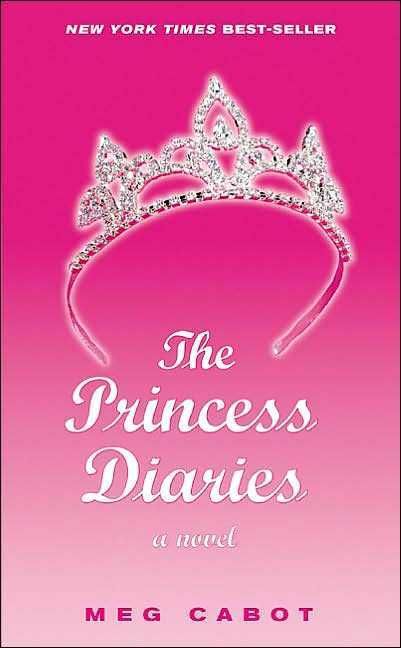
My cousin recently re-introduced me to one of my favorite childhood fiction series, The Princess Diaries by Meg Cabot. As a kid, I remember loving the fast and easy-to-read way in which they were written. Every storyline in the plot was told via Princess Mia's journal entries, online chats, emails, etc. Not only were the chapters interesting and unique, but they were just so darn relevant.

It wasn't soon after Instant Messenging programs became intensely popular in my middle school that these books came out, and it was really like reading an online correspondence from one of my friends. That aside, looking back at these books got me thinking, and I wondered, am I writing my novel from the most appealing point of view/ narration technique?

Here is a breakdown of these narration devices that should help you either decide which one to use, or re-evaluate the choice you've already made:

1. First Person Narration
(to learn more, click HERE )

This method is excellent if you want your readers to know exactly what one of your characters is thinking at all times. It normally includes "I, me, my, etc" statements and gives an in depth look at the feelings and emotions of a single character.

2. Second Person Narration
(to learn more, click HERE  )

This method is kind of crazy, and I have only read one book where it was used, and all of them were from my middle school years. This magical book was known as a "Create Your Own Adventure" book, and at the end of each chapter it would ask you a question, and send you to another chapter based on your decision. I didn't really enjoy this book (I'm a cover to cover kind of gal, no skipping around nonsense), and I can only imagine how tricky it was to create, so although it wasn't one of my favorites, I appreciate the work I know must have gone in to creating it.

3. Third Person Narration
(to learn more, click HERE  )

This method is generally used most often and occurs when the author narrates the story, describing the lives of the characters, revealing information for each throughout the book. (This is the method I chose to use, mostly because this is my first novel and its already a huge undertaking as it is. Maybe I'll get a little more creative with the next one).

4. Written Record Narration

Like the Princess Diaries books I discussed above, this form of narration is normally composed of seemingly compiled accounts from various sources. Aside from emails, online chats, etc, this can also include newspaper articles, speech transcripts, or the good old fashion snail mail correspondence.


Reblog this post [with Zemanta]

Sunday, March 14, 2010

Disambiguation: A novel-writing roadmap

march-a! march-a! march-a!Image by Esther17 via Flickr
You've probably already guessed this based on the topic of my blog, but I thought you all should know that I am unquestionably and irreversably addicted to words. I love to find new and interesting words in the books or websites I read, I own more than one word-a-day calendar, and once I discover them, I use new words. A lot.

Now, you might be asking yourselves, what does your word-addiction have to do with anything novel-writing-related, Jacey? The answer is simple: Disambiguation.

It's day four of my Spring Break, also known as the "You're not in a tropical vacation destination, there's snow outside, you're home alone, you might as well be productive" Day. So here I sit at the kitchen counter wondering where to start, and because staring at my computer screen and rocking out to Kevin Hammond aren't getting me anywhere, I decide to take a look at the deadlines I drew up at the start of my project.  Now after a somewhat discombobulated introduction we are finally arriving at the point of this post: The deadlines I set for myself so many months ago are looking...well, let's just say I must have had myself confused with Wonder Woman when I wrote them. According to my little timeline I am two weeks and four chapters behind schedule, not to mention the ten other tasks I am supposed to have done before break is over. A little discouraging, no?

Well after the initial mental headslap, I decided my situation isn't all that bad. Even though I'm not exactly on schedule, I have continuously made progress, no matter how little, since the day I started the project. I still have a functional list of what needs to be done (even though the dates are now a little off). This little timeline descrepency has given me a reason to sit back, re-evaluate my progress, and create a new (and hopefully more accurate) time-table.

Ultimately, that last one turned out to be really helpful. This morning I was at a loss for what to do, where to go, how to move forward, etc... Now, just three short hours later I have a new calendar and a renewed excitement. These new goals I have set are actually realistic, which is definitely an upper, and even with adding a little more time for each task I am still pretty good as far as total time goes.

Anyway, the lesson I learned today and wanted to share isn't really complex, but I think it could be helpful:

1.  Deadlines are sneaky little devils. I set goals for myself several months ago before I had even started writing, and more importantly, even before I had considered that my life would involve other objectives besides writing. I didn't think to consider that I might get smacked in the face with the flu the week before midterms, let-alone acknowledge that I might need to study for those pesky exams. So somewhere between preparing for advising meetings and getting the oil changed in my car those sneaky little deadlines slipped away.

2. Because of my tendency to overestimate my own capabilities I learned a little something about the nature of deadlines. If there aren't consequences for not meeting them, they lose a little of their luster. To combat this, I have decided to look at my "deadlines" as more of a "disambiguation chart," hence the little intro to word-addiction at the beginning of the post. Disambiguation basically means to remove ambiguities, and my calendar of tasks will help me to navigate the rest of my project in the same way that a road-map would help to disambiguate a tricky roadtrip.

Overall, I will really try to stick to the new deadlines I have set for myself but, like before, if I should happen to fail, at least it provides a record of what needs to be done so I am never permanently discouraged.
Reblog this post [with Zemanta]

Wednesday, February 24, 2010

Inspirational Rules for Writing Courtesy of P.D. James

Mantova 6-11 Sept 06 060Image by jimforest via Flickr
P.D. James, award winning novelist and author of several books including The Children of Men and Innocent Blood, has compiled a list of her five "Rules for Writing," and while there are MANY of these lists out there, I found hers to be incredibly inspirational. So take them in, embrace them, or even disreguard them and create a list of your own, but appreciate the fact that there are always ways for you to grow as a writer should you take the time to do so!

1. Increase your word power. Words are the raw material of our craft. The greater your vocabulary the more ­effective your writing. We who write in English are fortunate to have the richest and most versatile language in the world. Respect it.

2. Read widely and with discrimination. Bad writing is contagious.

3. Don't just plan to write – write. It is only by writing, not dreaming about it, that we develop our own style.

4. Write what you need to write, not what is currently popular or what you think will sell.

5 Open your mind to new experiences, particularly to the study of other ­people. Nothing that happens to a writer – however happy, however tragic – is ever wasted.
Reblog this post [with Zemanta]

Share This

ShareThis