Showing posts with label writers. Show all posts

Monday, March 29, 2010

How To Show Instead of Tell

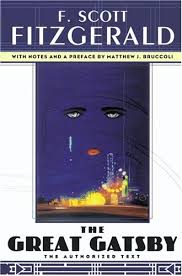
I haven't had much time lately for leisurely reading, but over the weekend I picked up my copy of  F. Scott Fitzgerald's The Great Gatsby and was reminded just how powerful good descriptive writing can be. Absolutely nothing Fitzgerald writes about is a prop or remains motionless. Every door creaks, light glows, windows harbor loitering individuals, etc. Reading his words makes you feel as though you are walking through the streets of New York alongside his narrator .

Keys to impressively descriptive writing like Fitzgerald's include, aside from practice, imagining yourself as a part of what is happening. If you were there, how would it unfold, by using this technique while writing down each and every step of the action you can create an environment that pulls your readers in. Also, something I've already discussed , use your characters wisely. Don't merely tell us what or how they are manuevering in your world, use detailed descriptions as well as the actions of your characters so show us.

The best way to achieve successful and immersive description is to utilize the five senses. The human brain  is incredibly complex, and something as simple as a mention of a particular scent can bring to mind a flurry of memories, sensations, feelings, and emotional reactions. This sense-memory  is only one example, and to reach your readers you should employ similar methods. So describe a scene based on the sights as well as the smells, sounds, and even tastes it encompasses.

Below is the example from The Great Gatsby that exemplifies descriptive writing at its best.So, read, enjoy, and feel free to share your favorite descriptive paragraphs.

I began to like New York, the racy, adventurous feel of it at night and the satisfaction that the constant flicker of men and women and machines gives to the restless eye. I like to walk up Fifth Avenue and pick out romantic women from the crowd and imagine that in a few minutes I was going to enter their lives, and no one would ever know or disapprove. Sometimes, in my mind, I followed them to their apartments on the corners of hidden streets, and they turned and smiled back at me before they faded through a door into warm darkness. At the enchanted metropolitan twilight I felt a haunting loneliness sometimes, and felt it in others--poor young clerks who loitered in front of windows waiting until it was time for the solitary restaurant dinner-- young clerks in the dusk, wasting the most poignant moments of night and life.


Again at eight o’clock, when the dark lanes of the Forties were five deep with throbbing taxi cabs, bound for the theatre district, I felt a sinking in my heart. Forms leaned together in the taxis as they waited, and voices sang, and there was laughter from unheard jokes, and lighted cigarettes outlined unintelligible gestures inside. Imagining that I, too, was hurrying toward gaiety and sharing their intimate excitement, I wished them well.


Reblog this post [with Zemanta]

Saturday, March 27, 2010

Voice Recognition Dictation Software: Changing the Way People Think About Writing

I spent six hours yesterday talking to my computer, and no, there weren’t any humans on the other end of the conversation. It was just me, myself, and the silver box of wires and chips otherwise known as my laptop. For hours. You see, I was trying something new that had been suggested to me by an eager freshman majoring in Creative Writing. She swore it would change the way I thought about writing, and in a way she was right. When she suggested that I try out voice recognition dictation software  she, no doubt, thought I would love it as much as she does. Sadly, she was mistaken. My experience with dictation software did, in fact, change the way I think about writing, but not in the way she imagined.

Digital dictation software  can be purchased almost anywhere, and several trial offers   are also available online for most brands . After installation, the concept of using it is simple enough. Opening the program accesses a microphone and opens a text editing program similar to Word on your computer screen. After that, it’s as easy as having a conversation with a friend, or so most dictation software marketing departments would have you think.

In reality, however, the technology is just not there yet.

“Years ago I tried dictating short stories and then transcribing them and they just failed,” said Wendell Mayo , acclaimed short-story author and current professor of fiction writing at Bowling Green State University.

Most writers who have found this type of software to be less then helpful point to one of two reasons. The first of these involves the extraordinary amount of time they require.

“It seems that [dictation software] might be useful for many fields, but not necessarily the writing of novels. Speed in composition is not the primary value,” said Lawrence Coates , Associate Chair and Graduate Coordinator for Bowling Green State University’s Department of English.

When authors attempt to utilize this particular type of software, they often become bogged down by technological errors and misunderstandings. The time it takes to rectify these errors can interrupt the creative process of even the most experienced writers, and while the errors can be small and seemingly insignificant, the vast number of times the user is required to stop and fix said errors waste valuable time while interrupting the flow of thoughts.

“I can type as fast as I think, and I like seeing the shape of words on the page,” adds Coates.

This time consuming element is only compounded by the second reason cited most for writer’s avoidance of digital speech recognition devices, and it involves the common desire, so eloquently described by Coates, to see the shape of words as they appear alongside thought.

It is the desire to see these words appear on the page as they are thought of that makes dictation devices so difficult to use for most writers. For example, with the personal experience I mentioned yesterday; time consuming corrections really set my progress back. The first sentence I dictated to the computer was supposed to be, “As she approached and tapped the obviously forlorn gentlemen on the shoulder, she was startled that he turned to look in her eyes,” but the computer felt compelled to report that, “She a sheet acts that the league and tapped the piously forlorn gentlemen on thrush older, she was startled that he turned tulip in her eyes.” By the time I deciphered all of that, I had completely lost my train of thought.

No matter the reason, whether it is hesitance to avoid dictation due to time constraints or a passion for the familiar, one thing is generally true, and is best summed up by Mayo,

“I have a unique relationship to paper and pen that is just part of my process.”

###


Reblog this post [with Zemanta]

Wednesday, March 17, 2010

Tools to Combat Writer's Block

Steacie Science and Engineering Library at Yor...Image via Wikipedia
Whether you've just started writing or have been writing for years, writer's block is an affliction that very few writers are immune to. It creeps up when you least expect it, and not even the best planning can prevent it. You might know exactly where you want your character to end up, but at some point between their start and achieving those goals, you may find yourself stumped.

There are several remedies available to sufferers of writer's block if you take the time to dig around, but here is a compilation of a few of the most common cures that are thought to be most helpful:

1. When in doubt, take the last portion you have written and try writing it from a new perspective. Sometimes changing the narrator, point of view, time, or setting can be just enough to create a spark that will get your writing back on track.

2. Make a change in your own scenery. Step away from the computer screen and pick up a notebook and pen or go to a local library or park to write.

3. Take a movie break. This is one of my personal favorites and whenever I just can't seem to figure out where my story should go next I pop in a DVD and get lost in someone else's story. Most of the time I try to pick a movie that is completely different from what I am working on, but no matter what movie, there is something inspiring and rejuvenating about watching a story through from start to finish.

4. Write something else. Finish an entry in your journal or write an email, just keep writing until you get back into the flow of things.

5. Take a walk or do some exercise. Set your work aside and take a stroll to clear your mind or think about your story without trying too hard. Sometimes the writer's instict is to overreact after hitting a wall and just like any other muscle, overworking the brain can cause a sprain or set you back even further (ok that might not be medically accurate, but trying to hard to move forward can induce a certain amount of panic that is definitely not productive.)

6. Story web. Take the central event from the last portion you've written and create a diagram, or web, based on all the paths your story could take.

7. Work out of order. Not all writing must be written in the order that it occurs. If you reach a barrier in the middle of a chapter set it aside for a while and move on to the next or the ending. As long as you're writing you're being productive.

8. Last but not least, you can always jump on the Pavlovian/ Skinner bandwagon and motivate yourself with a reward system.


Reblog this post [with Zemanta]

Wednesday, March 3, 2010

Where to Write??

Now that I'm officially back to writing fresh material I thought it would be fun to look at productive places to write. Some writers are very constrained and require an upright chair and desk to really get to work, but I am completely opposite. I rarely write in the same place from day to day and I am more likely to be found laying on the floor or sitting in my bed than at any desk.

Author Justin Cartwright emphasizes the importance of separating work from home so he has turned a hallway of his home into a "writing room." Michael Murpurgo was more like me and after much experimenting he discovered he was much more comfortable and wrote some of his best work sitting in a bed, but his wife was irritated at the invasion of space, so they made a separate "bed-writing room" in their home for him to work. Other authors take their work on the go. Simon Callow writes whereever he may find himself, including dressing rooms at performances or locations where he is filming.

Yesterday was my day off, so I set my camera to "continuous" and documented how my day of writing evolved:


Reblog this post [with Zemanta]

Monday, March 1, 2010

The Narrative Hook

Open bookImage by Honou via Flickr
Lately I have been having trouble finding time and energy to come up with new material for my novel, and the last chapter I wrote took me almost twice as long to finish as all of my other chapters. Finishing this particular chapter was a little bit of a milestone for my project and marked reaching the half-way point. So, to celebrate my hard work I decided to take a little break. Now I didn't want to stop the project completely because it really is something I enjoy, but I did want to take a break so I could come back with fresh ideas for the second half. In order to keep up with my progress and also take a refreshing break I decided to go back to my first chapter and really think about my book's opening.

I haven't really looked back at it since I wrote wrote it  a while back, and re-reading those first few paragraphs over again really made me think about just how important they are. The first chapter, or sentence even, is what draws the reader in. It makes them interested in your book and, essentially, keeps them reading through to the end.

Think back to all of your favorite opening lines. Here are some of mine:

1. It is a truth universally acknowledged, that a single man in possession of a good fortune, must be in want of a wife.
2. Happy families are all alike; every unhappy family is unhappy in its own way.
3. It was a bright cold day in April, and the clocks were striking thirteen.
4. If you really want to hear about it, the first thing you'll probably want to know is where I was born, and what my lousy childhood was like, and how my parents were occupied and all before they had me, and all that David Copperfield kind of crap, but I don't feel like going into it, if you want to know the truth.
5. It was a pleasure to burn.
6. It was love at first sight.
7. In my younger and more vulnerable years my father gave me some advice that I've been turning over in my mind ever since.

All of these lines had some sort of narrative hook or method of drawing the reader in. Narrative hooks are the author's pick-up lines, and cheesy cliche's aren't going to get you the phone number. Whether it was Jane Austen's blunt honesty that made you want to read on to find out why she believed as she did or a simple teaser making you wonder just what advice F. Scott Fitzgerald's character got from his father, you wanted to read on, to find the answers you were looking for.

After reading my opener again I realized just how much work it needed. A strong opening can make for a strong novel, and my first sentence just wasn't cutting it. So I looked again at my favorite book openers and went back to the drawing board. I guess the lesson I learned, and want to share, is simple. Don't be afraid to make changes, but most of all, don't forget to objectively examine your work to discover when changes need to be made.
Reblog this post [with Zemanta]

Monday, February 8, 2010

Dream Big, Little Girl

We all have a list, a list of things we want to accomplish before it becomes too late, and if your list is like mine, it can look a little overwhelming. For the past four years I have slowly been making my way through my life’s list, and I am finally at the task that I am most excited about: writing a novel. So far, this has been one of the most difficult of my undertakings which have run the gamut from conquering my fear of roller-coasters to getting a full-ride to college.

This goal is one that I am most excited to accomplish, and if, like me, you have always wanted to sit down and try your hand at writing a book, I will be sharing with you everything I have learned from my experience thus far. Like most of you, completing a novel is something I have never successfully attempted before, so to get through it in one piece I relied heavily on the support of my friends, family, and professors who helped me to battle one of my arch-enemies, procrastination.

So in the spirit of anti-procrastination, let’s get started! In this blog you can look forward to tales of triumph, tragedy, and a few motivational tidbits here and there to help you along the way as you plan, prepare, and attempt to get your manuscripts published.

“And by the way, everything in life is writable if you have the outgoing guts to do it and the imagination to improvise. The worst enemy to creativity is self-doubt.” Sylvia Plath

Share This

ShareThis